If you’ve ever watched a school hallway transform into a full-on battle zone — kids sprinting to stuff silver coins into rival class jars, teachers dramatically announcing the leaderboard at morning assembly, entire families raiding the change jar on the kitchen counter — then you already know the magic of a penny wars fundraiser.
It’s one of those rare fundraisers that basically runs itself. No order forms. No selling chocolates door to door. No chasing parents for money weeks after the event ended. Just coins, a little friendly competition, and an impressive amount of cash raised with minimal effort on your part.
This post may contain affiliate links. As an Amazon Associate I earn from qualifying purchases. If you click and buy, I may receive a small commission at no extra cost to you. Read our Disclosure Policy
Whether you’re a PTA president planning your next big push or a classroom teacher looking for a fun way to get the whole school involved, this guide covers everything you need to make your penny wars fundraiser a success — from setting it up and decorating your jars to keeping the energy high all week long.
What Is a Penny Wars Fundraiser?
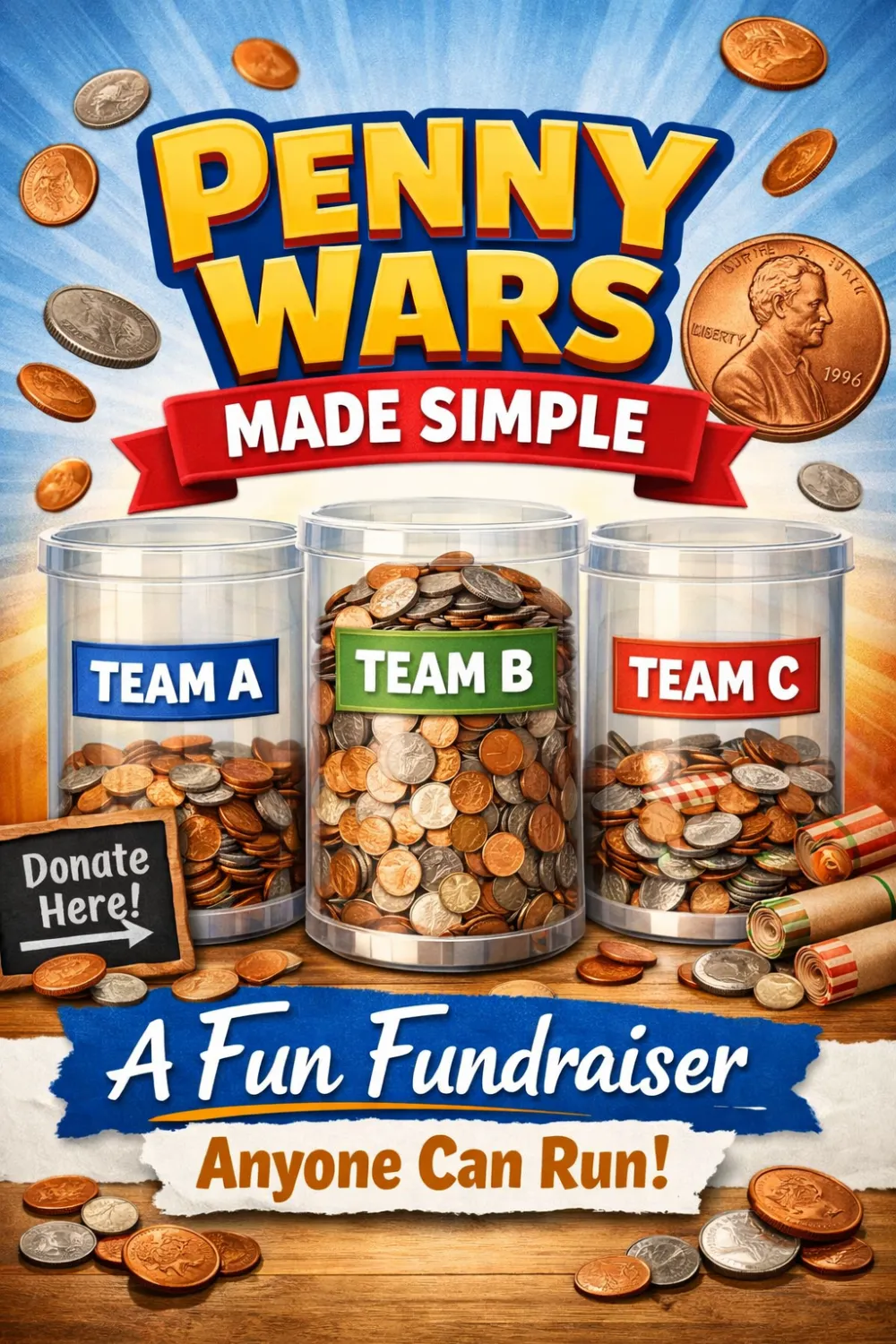
Penny wars is a coin-drive fundraiser with a competitive twist that makes it genuinely exciting for kids (and let’s be honest — adults too).
Here’s how it works:
- Pennies are worth +1 point for the class jar they go into
- Silver coins (nickels, dimes, quarters) are worth negative points — but only when placed in a rival class’s jar
- Dollar bills can be added too, typically counted as +100 points for the class they’re placed in
- At the end of the fundraiser, the class with the highest score wins
The genius of the game is the strategy. Kids will happily dump handfuls of quarters into a competing class’s jar to tank their score — which means more money raised overall, even as each class tries to “sabotage” the others. Everyone’s incentivised to keep giving, and the drama keeps everyone engaged right up to the final count.
Why Penny Wars Works So Well for Schools
There’s a reason this fundraiser comes up again and again in PTA meetings. Here’s what makes it such a reliable choice:
- No selling required — kids don’t have to knock on doors or pitch products to relatives. They just bring in coins from home.
- It runs itself — once the jars are out and the rules are explained, the competition does the heavy lifting for you.
- Every grade can join in — from kindergartners excitedly dropping pennies in their class jar to fifth graders plotting their silver coin strategy, it works across all ages.
- It raises real money — schools regularly raise anywhere from $500 to $5,000+ depending on school size and how well it’s promoted.
- It’s genuinely fun — the competitive element creates buzz in a way that passive fundraisers simply don’t.
If you’re weighing this up against other options, it’s worth reading What Is the Most Profitable Fundraiser for Schools to see how it stacks up.
Pro tip: Penny wars tends to work best in schools where classes or grades have a natural sense of friendly rivalry already — it amplifies existing school spirit rather than creating it from scratch.
How to Set Up Your Penny Wars Fundraiser (Step by Step)
Getting this off the ground is much simpler than it might seem. Here’s a straightforward process to follow:
- Set your dates — one to two weeks is the sweet spot. Long enough to build momentum, short enough that interest doesn’t drop off. Avoid overlapping with school holidays or report card week.
- Decide your competition structure — class vs class is the most common and usually the most exciting. You can also do grade vs grade if you have a very large school.
- Set a fundraising goal — give people something to aim for. A visible thermometer on the school noticeboard works brilliantly.
- Brief teachers and staff — make sure everyone understands the rules before launch so there’s no confusion. A one-page summary emailed out ahead of time works well.
- Kick off with a bang — announce it at assembly, send a flyer home the Friday before, and get the jars out on day one.
- Plan your counting process — decide in advance who counts the coins and when. Having a clear process here avoids headaches at the end.
Pro tip: Launch on a Monday so you have a full week of school days to build momentum, and plan a final “bonus coins” push on the last day to drive a late surge.
Penny Wars Jar Ideas
The jars are more important than they might seem — a well-decorated, clearly labelled jar sitting on a classroom windowsill is a constant visual reminder for kids to bring in coins. Here are some ideas to make yours stand out:
- Clear mason jars — classic for a reason. Easy to see the coins piling up, which is motivating in itself.
- Large clear plastic containers — great if you’re worried about glass around younger kids.
- Decorated with class photos — print a class photo and tape it to the jar. Instant personalisation and kids love seeing their own faces on it.
- Labelled with the class name and teacher — keep it clear and simple so there’s no confusion when kids are dropping coins in.
- Colour-coded lids — if you want to add an extra visual element, match each class to a colour.
- Slot-top lids — cut a coin slot in the lid of a plastic container to make it feel more official and prevent coins from spilling.
Pro tip: Put the jars somewhere high-traffic but supervised — the main office foyer or outside the library works well. Somewhere coins are visible but can’t easily be tampered with.
How to Make a Penny Wars Flyer
The flyer is your primary communication tool — it’s what explains the rules to families and gets them excited to participate. A good penny wars flyer should include:
- The name and dates of the fundraiser — simple and prominent
- How the game works — a plain-English explanation of pennies vs silver coins, written so a seven-year-old (and their parents) can understand it
- What you’re raising money for — families give more generously when they know what the money is going towards
- The prize for the winning class — make it sound exciting even if it’s simple
- Who to contact with questions
Keep the design simple and bright — you want it to survive the journey from backpack to kitchen counter. Send it home on the Friday before launch, follow up with an email or Class Dojo message, and put a copy up on the school bulletin board.
Pro tip: Include a fun tagline — something like “Every penny counts… and every quarter counts against someone else!” helps set the playful tone and gets kids asking questions before it’s even started.
Keeping the Excitement Going
The energy on day one is usually easy. It’s days four through eight where things can quietly fizzle — and that’s where a little planning goes a long way.
- Daily leaderboard updates — announce the current standings every morning. Keep it lighthearted and dramatic. Kids absolutely live for this.
- Bulletin board display — create a visual scoreboard near the school entrance that gets updated daily. The penny wars bulletin board becomes a gathering point where kids check the scores and plot their next move.
- Class shoutouts — a quick mention in the school newsletter or on Class Dojo for whichever class had the biggest single-day haul keeps participation feeling recognised.
- Midweek twist — consider a “bonus day” halfway through where pennies are worth double points. It re-energises flagging classes and gives anyone who’s behind a fighting chance.
- Countdown — as you get to the final two days, make a big deal of the countdown. “48 hours left — who’s going to take the crown?”
Pro tip: Get the principal involved in the daily announcements if you can. When the head teacher is hamming up the drama, kids go home and tell their parents — and coins appear the next morning.
Rules to Keep It Fair
Clear rules communicated upfront will save you a lot of headaches. Here’s what to nail down before you start:
- What counts as a penny — US pennies only, or are foreign coins accepted? Decide in advance.
- How silver coins are counted — clarify that silver coins in a rival jar are negative for that jar, not positive for the depositor’s jar. This confuses people at first.
- Dollar bills — decide if these are accepted and how they’re scored (most schools count them as +100 points).
- Who can add coins to which jars — typically any student or staff member can add to any jar, but set clear boundaries if needed.
- The counting process — coins should be counted by a neutral party (office staff, a team of parent volunteers) at a set time, not by the competing classes themselves.
- What happens in a tie — unlikely but worth having a plan for.
- No removing coins from jars — this should go without saying, but say it anyway.
Pro tip: Type up a simple one-page rules sheet and give a copy to every class teacher on day one. When kids argue about the rules (and they will), teachers can point to the sheet.
Prize Ideas for the Winning Class
The prize doesn’t need to be expensive — in fact, the sillier and more memorable it is, the better. Here are ideas that kids genuinely get excited about:
- Extra recess — timeless, universally loved, costs nothing
- Pyjama day — the winning class gets to come to school in their PJs for a day
- Principal does something embarrassing — reads a story in a funny costume, gets a pie in the face, sits on the roof for lunch. These become school legend.
- Pizza or ice cream party — a classic for good reason. Keep it simple: a few pizzas or a tub of ice cream goes a long way.
- Movie afternoon — popcorn, a film of the class’s choice, and an hour off regular lessons. Wildly popular.
- No homework pass — especially effective with older kids
- Special privilege — first in line at lunch for a week, or choosing the music during art class
You can also combine penny wars with a raffle element — check out these raffle basket ideas for fundraisers if you want to add a second prize layer that gets the whole school involved, not just the winning class.
Pro tip: Announce the prize before the fundraiser starts, not after. The promise of a pyjama day or a pizza party is a powerful motivator — use it.
Is Penny Wars Right for Your School?
Penny wars is a brilliant fundraiser — but like any event that involves families sending money in, it’s worth thinking through a few things before you commit.
- Family income levels vary — in any school community, some families have a jar of change on the counter and others really don’t. If your school has a significant proportion of families on tight budgets, the competitive element can inadvertently create pressure to contribute in order for a child not to feel like they’re “letting their class down.” Think about whether there’s a way to make participation feel genuinely optional.
- Frame it as fun, not obligation — the language in your flyer and announcements matters. “Bring in any coins you find at home!” feels very different from “Every penny helps your class win!” The first is an invitation; the second can feel like pressure.
- Consider an anonymous contribution option — some schools allow families to drop coins into a general pot rather than a specific class jar, so that kids who can’t contribute much don’t feel singled out.
- The silver coin strategy can tip into mean-spirited — for most schools this stays fun, but in some class dynamics the “sabotage” element can occasionally get a bit intense. Keep an eye on it and be ready to address it if the competitive spirit tips into something less friendly.
- Is there a simpler option? — if you’re not sure penny wars is the right fit, a candy gram fundraiser or a bingo night might be a better match for your community.
None of these are reasons to rule it out — just things worth thinking through so you can set it up in a way that works for everyone. For more on making PTA fundraising feel less stressful and more equitable, this post on why PTA fundraising feels so hard is worth a read.
Wrap-Up: Ready to Watch Those Pennies Roll In?
Penny wars is one of those fundraisers that sounds almost too simple — and then you run it, and you’re amazed at how much money a school full of kids and a few well-placed jars can generate in a week. The competition keeps everyone engaged, the setup is minimal, and the memories (especially if your principal ends up with a pie in the face) last for years.
Get your jars decorated, your flyer out the door, and your leaderboard up — and then sit back and let the friendly rivalry do the rest.
Looking for more fundraiser ideas? Here are a few more posts to help you plan your best school year yet: