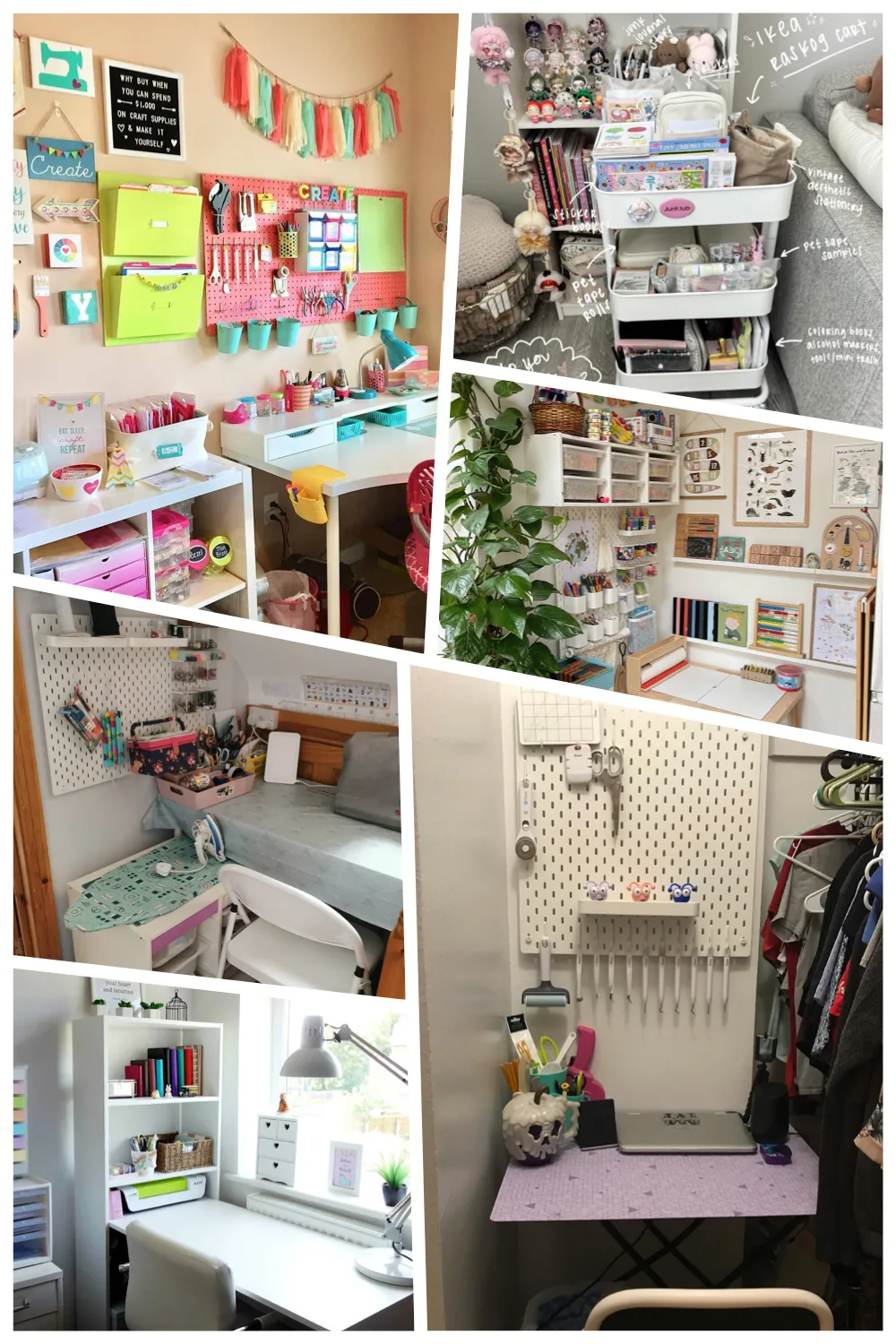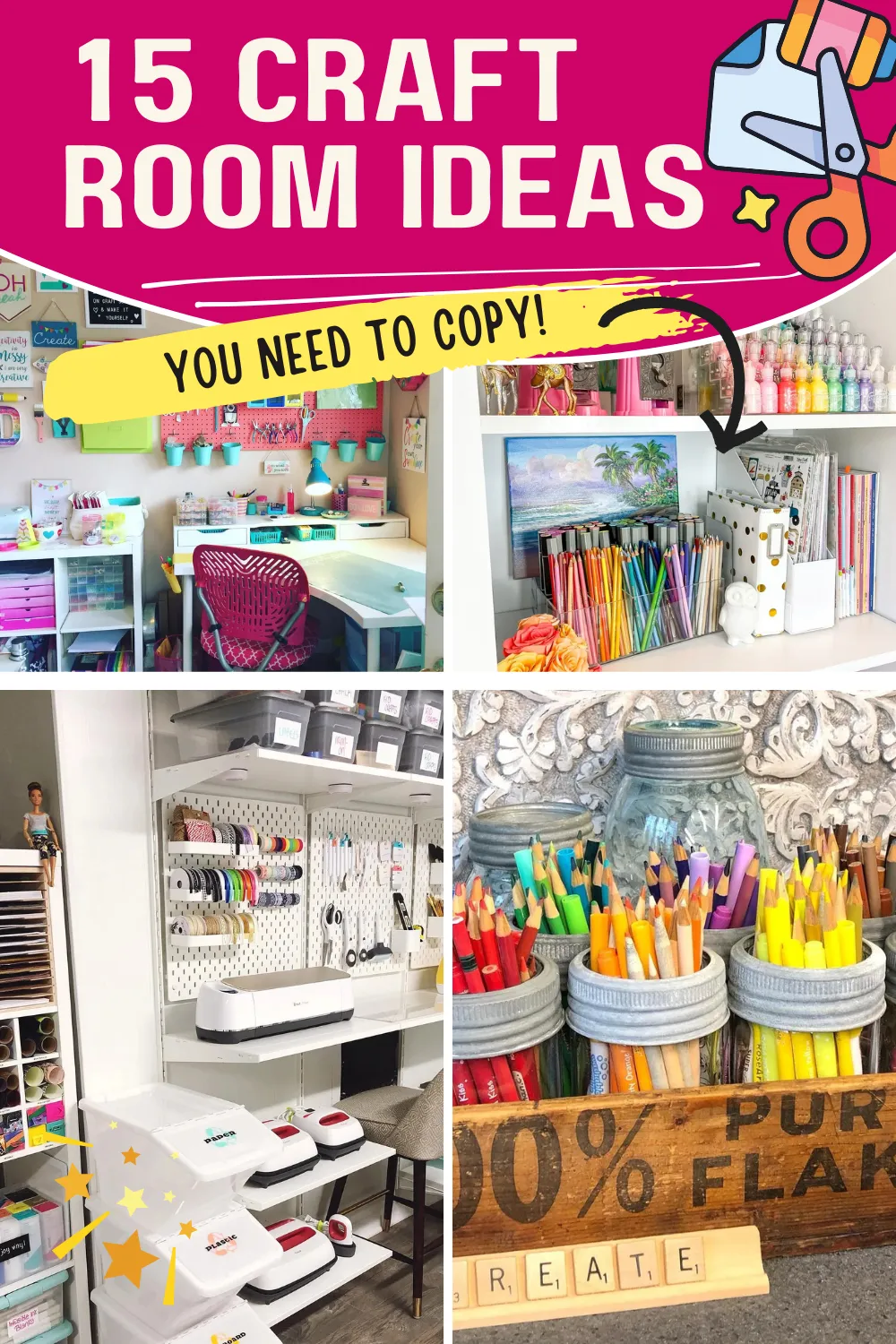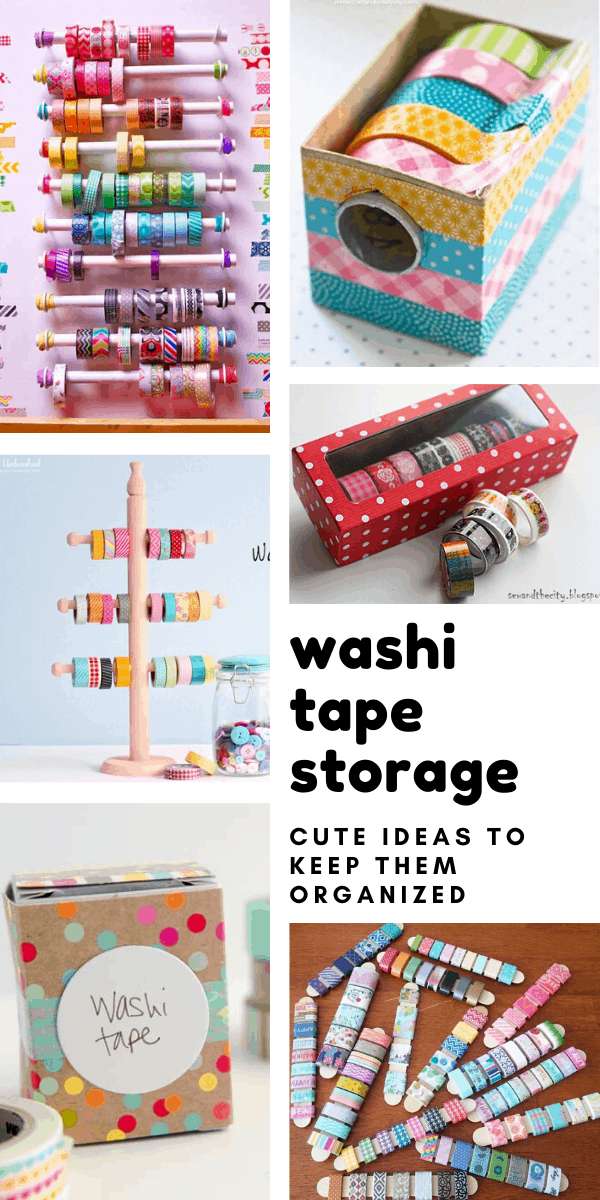
Craft room tours are fun to watch… but they’re even better when you stop scrolling and start stealing the ideas that actually make a difference. This post takes some of the smartest setups we’ve spotted in real craft rooms and breaks them down into simple, practical takeaways you can use in your own space.
Instead of showing you one “perfect” room, we’re focusing on individual ideas — clever storage, better layouts, and small changes that make crafting easier and more enjoyable. Think less overhaul, more why didn’t I think of that
This post may contain affiliate links. As an Amazon Associate I earn from qualifying purchases. If you click and buy, I may receive a small commission at no extra cost to you. Read our Disclosure Policy
Whether you’re working with a full room, a corner desk, or a space that pulls double duty, these ideas are meant to be mixed, matched, and adapted. Browse the eye candy if you want… then keep the ideas that help your craft room work harder for you.
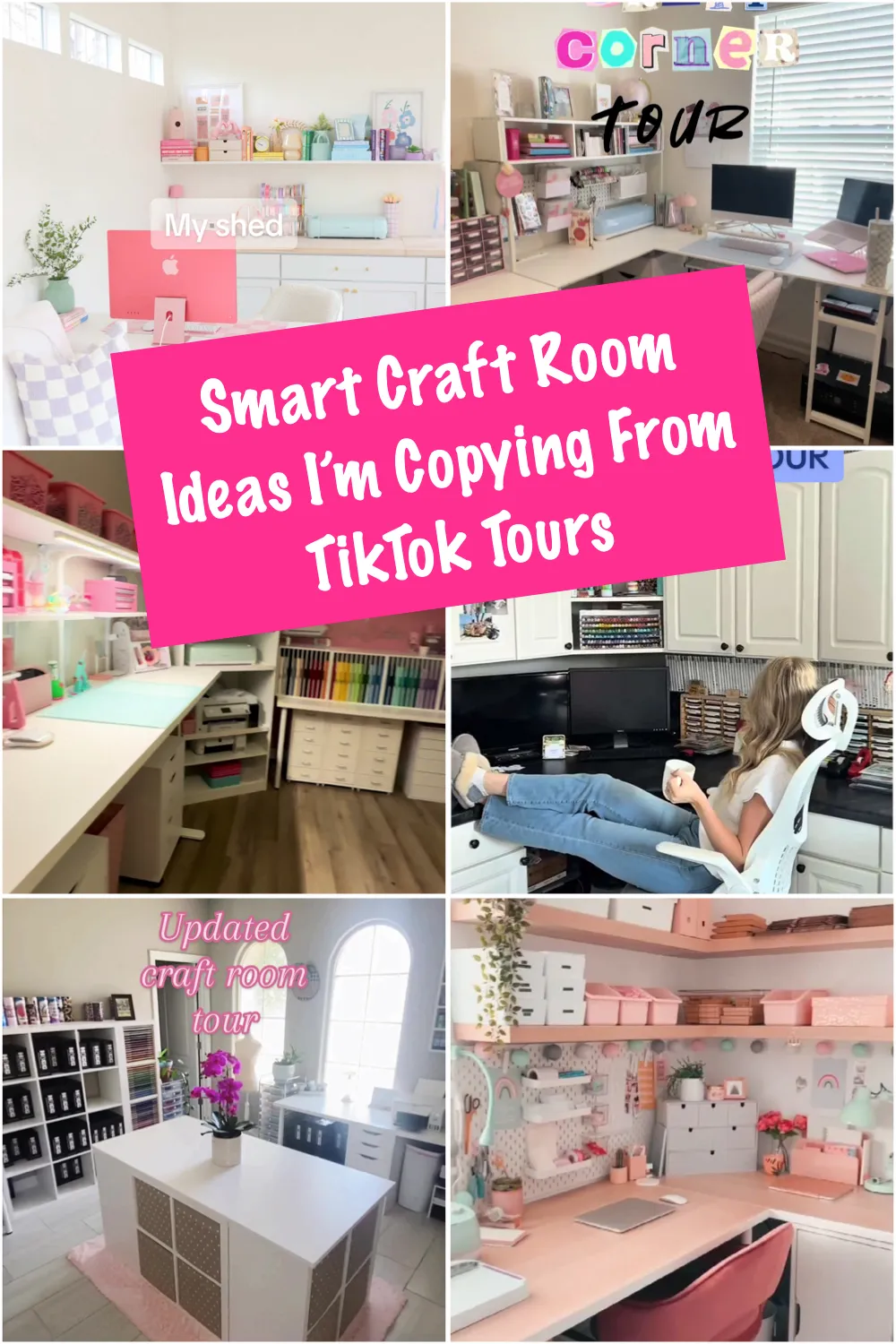
Build a Central Craft Island Using IKEA Kallax Units
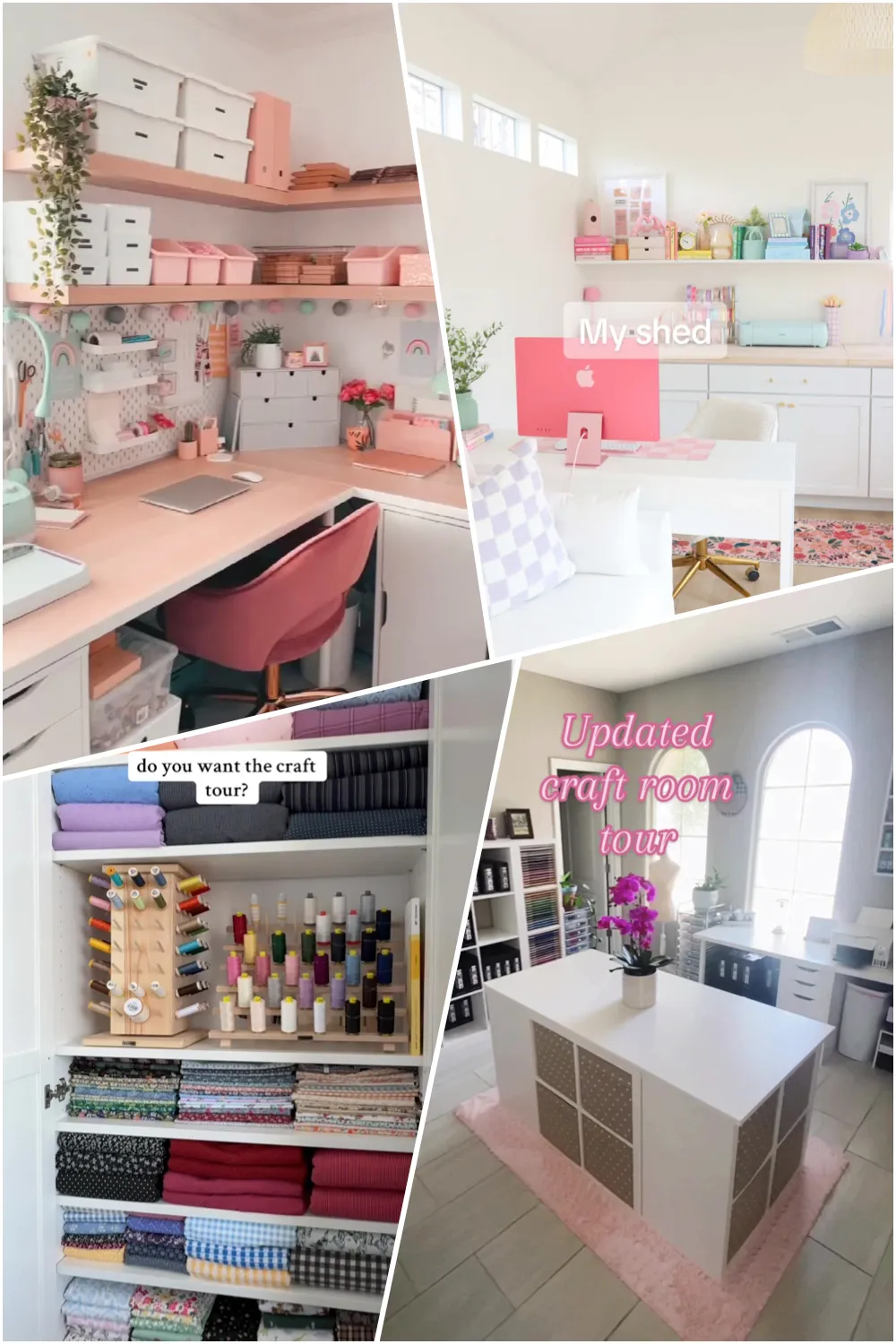
Instead of pushing all your furniture against the walls, this craft room uses IKEA Kallax units to create a central workstation, and it’s such a smart move if you want both workspace and storage.
By placing multiple Kallax units back-to-back and topping them with a solid work surface, you get a large island that works from all sides. The top gives you loads of room for cutting, assembling, sewing, or spreading projects out, while the cubes underneath hold an impressive amount of supplies.
What really makes this setup shine is how flexible it is. You can store paper, vinyl, fabric, tools, and works-in-progress in baskets or boxes, all within arm’s reach while you’re working. It keeps the mess contained without hiding everything away in another room.
This kind of central island works especially well if:
- You like to stand while crafting
- You work on multiple projects at once
- You want storage that’s easy to see and grab from
- You share the space or craft with kids and need access from more than one side
Top it with a smooth surface for easy cleaning, add a soft rug underneath to make standing more comfortable, and you’ve got a hardworking centerpiece that anchors the entire room.
Use a Pegboard to Keep Everyday Tools Visible and Reachable
This craft room uses a pegboard above the desk to keep frequently used tools right where you need them — and that’s exactly why it works so well. Instead of digging through drawers every time you need scissors, tape, or a ruler, everything is visible and within arm’s reach.
What makes this pegboard setup especially practical is how it’s styled with intention. Small shelves, hooks, and cups are used to hold tools upright and easy to grab, while still keeping the workspace clear. It’s not overcrowded, and that’s key — the pegboard holds the things you reach for daily, not everything you own.
Pegboards are ideal if:
- You craft often and want less stop-start frustration
- You work at a desk and need tools without cluttering the surface
- You like systems that can be rearranged as your needs change
- You want storage that grows with your hobbies
Another bonus is flexibility. As your tools or projects change, the pegboard can change with you — no drilling new holes or buying new furniture.
If you’re short on desk space, a pegboard like this can make a small craft area feel far more functional without adding bulk.
Use Wall Shelves to Store Supplies Without Losing Desk Space
This craft room (sorry craft shed) makes brilliant use of wall shelves to add storage without crowding the workspace. By keeping supplies off the desk and up on the walls, the room stays open, light, and easy to work in — even with a lot of creative tools on hand.
What really works here is how the shelves are used. They hold a mix of practical items (like machines, paper stacks, and containers) and decorative pieces that make the space feel inviting. Books, storage boxes, and tools are grouped neatly, which keeps everything accessible without turning the shelves into visual clutter.
Wall shelves are especially useful if:
- You’re short on floor space
- You want your desk to stay clear for actual crafting
- You like seeing your supplies at a glance
- You want storage that also adds personality to the room
The key is being selective. Shelves work best when they’re used for things you reach for often, while bulkier or messier supplies live in drawers or cabinets below.
Used this way, wall shelves become both storage and styling, helping your craft room feel organised and inspiring.
Use Lots of Shallow Drawers So Nothing Gets Lost
This craft room leans heavily on shallow drawer units, and there’s a very good reason for that: you can actually see what you own. Instead of deep drawers where supplies pile up and disappear, shallow drawers keep everything spread out and easy to find.
Each drawer holds one category of supplies — pens, stickers, washi tape, tools, vinyl scraps — so you’re not rummaging or dumping things out just to find what you need. It saves time, reduces frustration, and makes cleaning up much faster.
Shallow drawers work especially well if:
- You have lots of small or flat supplies
- You get overwhelmed by “junk drawer” situations
- You want to keep your desk clear while still having everything close
- You like systems that stay organised without constant effort
Another bonus is flexibility. As your craft interests change, you can quickly reassign drawers without reorganising an entire cabinet.
If you’ve ever thought “I know I have this somewhere…” while crafting, shallow drawers might be the fix you didn’t know you needed.
Make the Most of Corner Space Instead of Leaving It Empty
This craft room uses the corner as a working storage zone, rather than dead space, and it makes a huge difference to how much the room can hold. By wrapping storage and work surfaces around the corner, the layout feels intentional and efficient instead of chopped up.
The corner here houses tall shelving and drawer units that keep machines, paper, and tools organised without blocking walkways. It also helps define different zones — cutting, storage, and prep — while still keeping everything connected.
Making use of corners works especially well if:
- You want to maximise storage without crowding the room
- You use larger tools or machines that need dedicated spots
- You like clearly defined work areas
- Your craft room isn’t perfectly square (most aren’t!)
Corners are ideal for taller units, vertical storage, or housing machines you don’t need to move constantly. When planned well, they quietly do a lot of heavy lifting without stealing attention from your main workspace.
If your craft room feels like it’s “missing” space, chances are the corner is where it’s hiding.
Create Clear Zones So Your Craft Room Works Like a Workspace
This craft room is set up with clear zones, and that’s what makes it work so well for someone running a craft business. Instead of everything competing for space, each part of the room has a specific job — and that alone reduces chaos and decision fatigue.
There’s a dedicated creating zone for hands-on work, a single shelving unit where all Cricuts and printers live together, one area for supply storage, a separate shipping station, and even a defined spot for filming content. Nothing has to be moved or set up each time — you just move between zones as your workflow changes.
Zoning is especially helpful if:
- You sell what you make
- You switch between tasks throughout the day
- You’re constantly setting up and packing away
- Your craft room doubles as a content or business space
Grouping similar tools together (all machines in one place, all supplies in another) means you’re not walking back and forth or digging through multiple storage areas. It also makes it easier to scale — when you add a new machine or product, you already know where it belongs.
Even in a smaller room, zoning can be as simple as assigning corners, walls, or shelving units to specific tasks. The goal isn’t perfection — it’s creating a space that supports how you actually work, not how a room looks in a photo.
Give Everything a Home So Staying Tidy Is Easy
This craft space shows what happens when everything has a clearly defined place. Fabric is folded by size, thread is stored upright and visible, tools are grouped together, and nothing is just shoved wherever it fits. The result isn’t just a pretty cupboard — it’s a space where you can actually find what you need without breaking your flow.
When supplies are stored consistently, tidying up becomes almost automatic. You’re not standing there wondering where something should go, and you’re far less likely to end up with piles “just for now” that turn into permanent clutter.
This approach works especially well if:
- You work with lots of similar items (fabric, thread, paper, vinyl)
- You want to be able to see what you already own
- You get frustrated re-buying supplies you know you have
- You craft or sew regularly and need quick access
What’s key here is that the system matches the supplies. Folded fabric fits the shelf height, thread is stored so colours are visible, and nothing is overfilled. It’s not about being perfectly neat — it’s about making order the easiest option.
If your craft room never seems to stay tidy, the issue usually isn’t discipline. It’s that things don’t have a clear place to return to.
Use a Corner Desk to Create a Dedicated Craft Zone
A corner desk is one of the easiest ways to turn an awkward space into a fully functional craft area. Instead of fighting the corner, this setup leans into it, wrapping the desk along two walls to create a clear, defined craft corner.
What works so well here is how much surface area you gain without the desk dominating the room. There’s space for a computer, machines, and active projects, while storage units underneath and shelves above keep supplies close but contained.
A corner desk is especially helpful if:
- Your craft room is also a home office
- You want to separate “work mode” from the rest of the room
- You need multiple work surfaces without adding bulk
- You’re carving out a craft space in a spare room or bedroom
It also naturally supports zoning. One side of the desk can be for designing or computer work, while the other is used for hands-on creating. You’re still in one compact footprint, but everything has its place.
If your craft space currently feels like it’s floating in the room with no clear purpose, a corner desk can instantly give it structure and direction.
Use Kitchen Cabinets for High-Capacity Craft Storage
This craft room borrows a trick straight from kitchens: full-size cabinetry for serious storage. And it works beautifully. Upper and lower cabinets create a clean, built-in look while hiding a huge amount of supplies behind closed doors.
Kitchen cabinets are designed to hold weight, which makes them perfect for craft tools, paper stacks, machines, inks, stamps, and bulk supplies. Everything is protected from dust, visual clutter is kept to a minimum, and the room instantly feels calmer and more intentional.
This approach works especially well if:
- You have a lot of supplies and want them out of sight
- You run a craft business or craft daily
- You want your room to feel more polished than “storage-y”
- You’re converting a spare room or basement into a long-term craft space
Another big bonus is customisation. Cabinet interiors can be fitted with drawer inserts, pull-out trays, or vertical dividers so you’re not just stacking things and forgetting them. It’s storage that actually supports how you work.
If open shelving makes your brain feel busy, kitchen cabinetry is a great way to keep your craft room functional and visually calm.
It Doesn’t Have to Be IKEA (Thrifted Furniture Works Beautifully)
So many craft rooms we see online are filled with crisp white IKEA furniture — and while that look is clean and practical, it’s not the only option. It can also add up fast. This space is a great reminder that real wooden furniture, including thrifted pieces, can work just as hard in a craft room.
Vintage cabinets, sideboards, bookcases, and dressers often offer deeper shelves, sturdier construction, and more character than flat-pack alternatives. They’re ideal for storing yarn, fabric, tools, and baskets — and they instantly make a craft room feel warmer and more personal.
This approach is especially great if:
- White furniture isn’t your aesthetic
- You enjoy a cozy, collected look
- You’re decorating on a budget
- You already own solid wood pieces that could be repurposed
Glass-front cabinets are particularly useful, letting you see what you have without everything feeling visually noisy. And if the colour isn’t quite right, a simple paint job can transform a thrifted piece into something that feels completely custom.
The biggest takeaway here is freedom. Your craft room doesn’t need to match a catalogue to be functional. Mixing materials, finishes, and furniture styles can create a space that feels more like you — and often for a fraction of the cost.