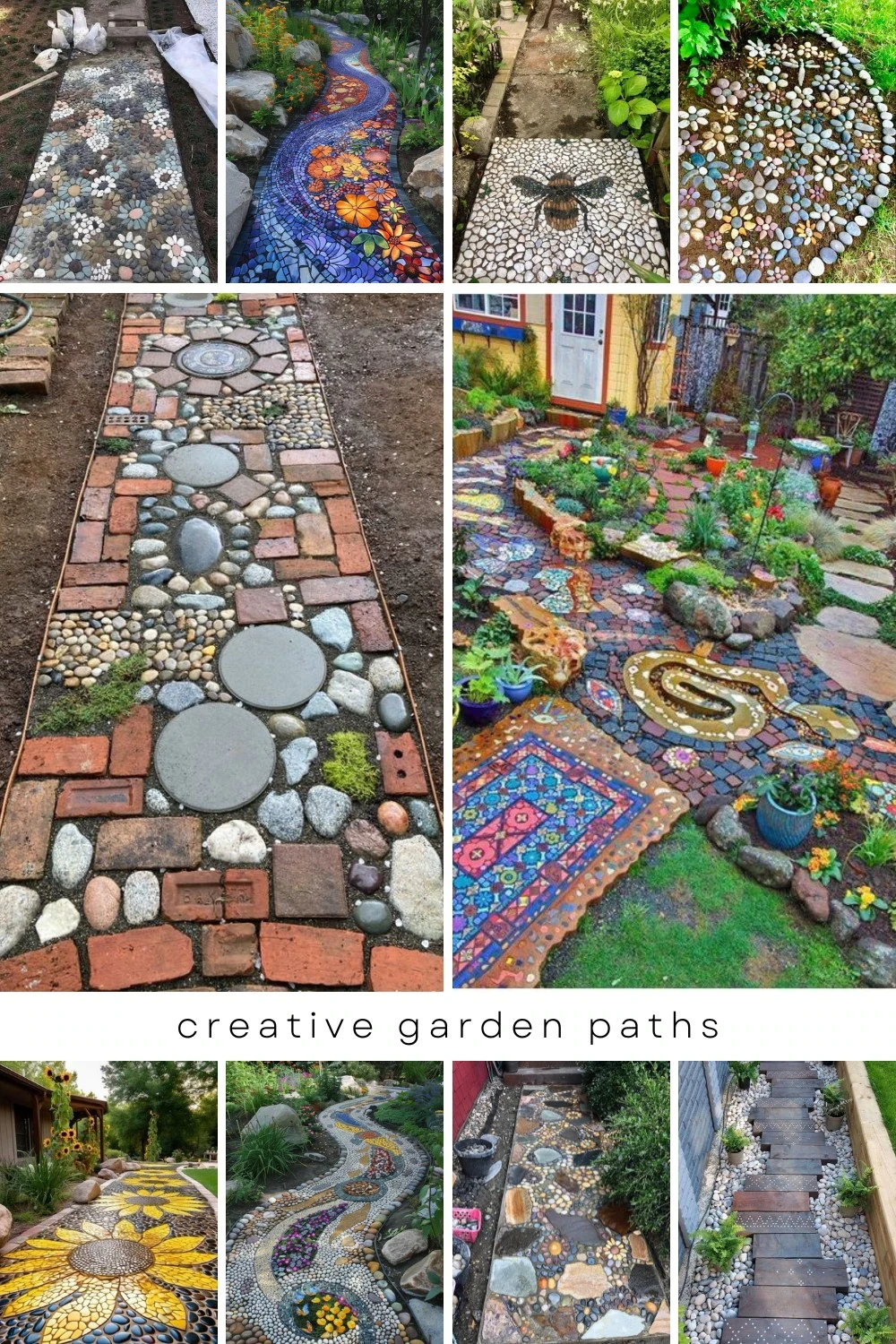
A beautiful garden path does so much more than get you from A to B. It sets the tone for the whole outdoor space — whether that’s whimsical and handmade, bold and contemporary, or quietly natural. The best part? You don’t need a big budget or professional skills to create something truly stunning. From pressed pebble flowers to leaf-stamped concrete and painted stepping stones, these 20 garden path ideas prove that a little creativity goes a very long way.
This post may contain affiliate links. As an Amazon Associate I earn from qualifying purchases. If you click and buy, I may receive a small commission at no extra cost to you. Read our Disclosure Policy
1. Butterfly Pebble Stepping Stones
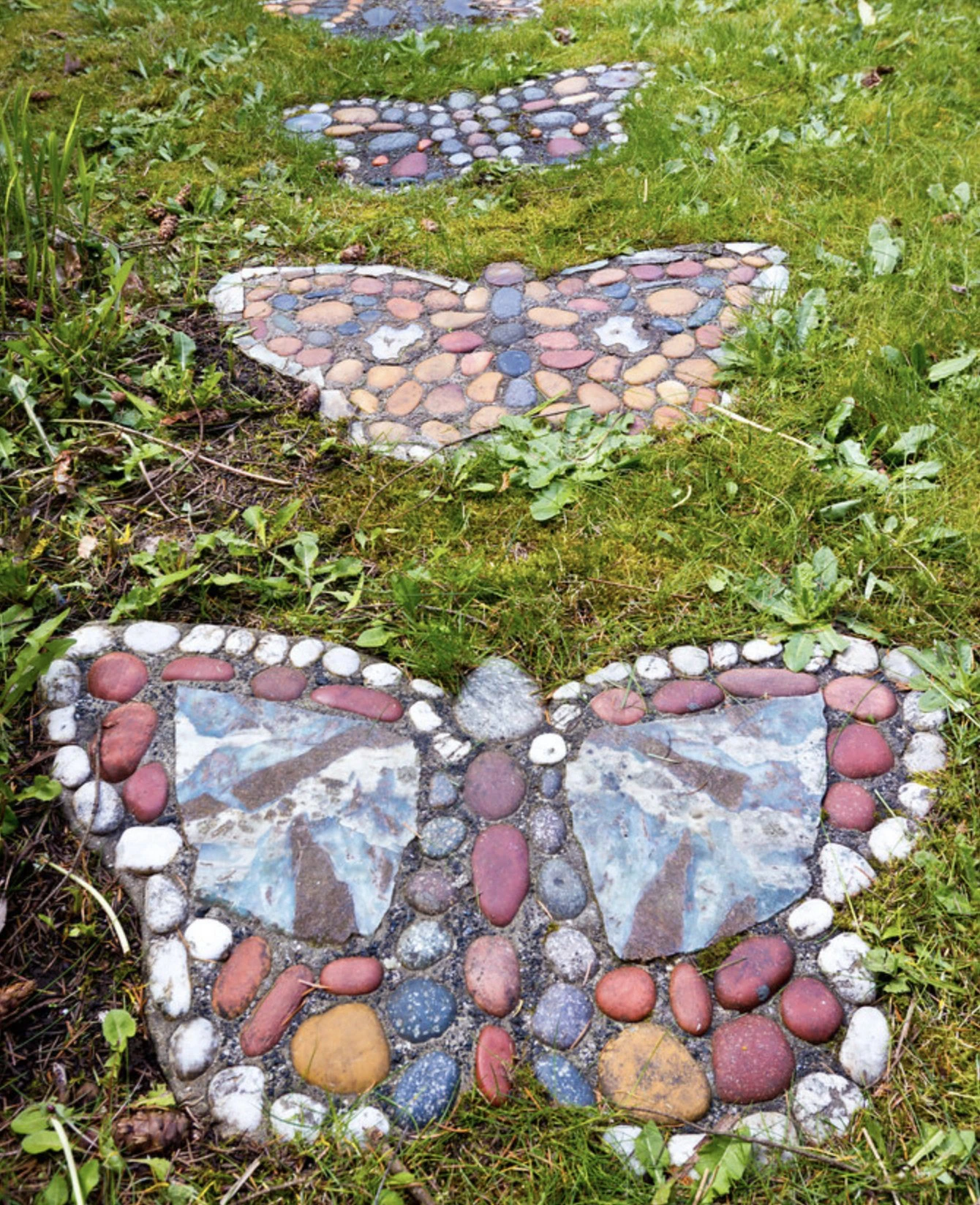
Source: Walker Rock Garden
This is such a lovely idea for a garden path — it feels a bit magical without being complicated to make. Instead of standard stepping stones, this design uses butterfly-shaped pavers filled with pebbles and stones, which gives the whole path a soft, handmade look that blends beautifully into the grass. To recreate something like this, plan out your path with evenly spaced butterfly shapes, leaving grass or moss to grow in between for that relaxed, natural feel. The butterflies themselves can be made using simple moulds or by shaping wet concrete by hand, then pressing in a mix of smooth pebbles, river stones, and a few larger feature stones to create the wings. Once set, these stepping stones sit flush with the lawn — and over time, a little grass creeping around the edges actually adds to the charm.
2. Winding Colourful Tile Mosaic Path
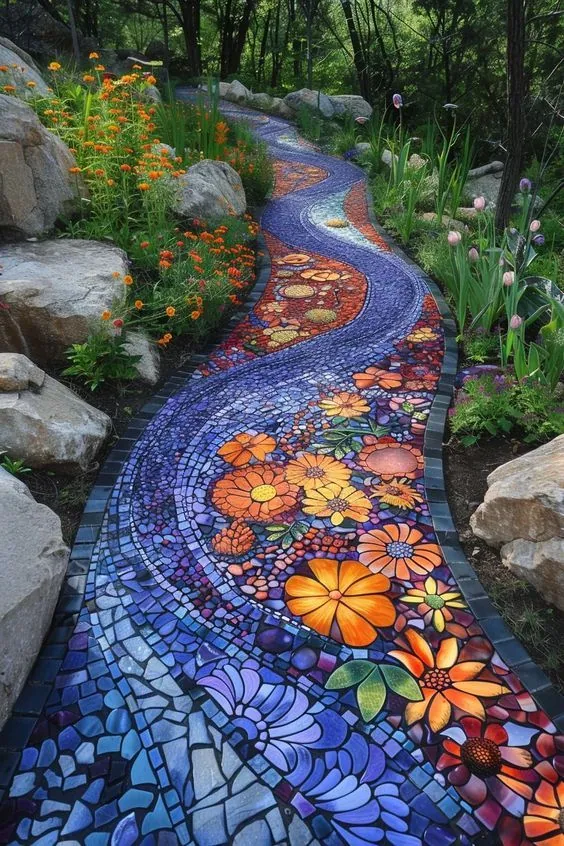
This is probably the most jaw-dropping garden path you’ll ever see — and yes, it’s real. The path winds through the garden like a river of colour, with thousands of tiny tiles laid into flowing floral patterns in blues, purples, and burnt oranges. This is a serious undertaking, but it doesn’t have to be done all at once. Many mosaic artists tackle a project like this in sections over a season, building outward from a focal point. If you love the idea but want something more manageable, try creating just one or two mosaic medallion sections within a simpler flagstone or gravel path — you get the wow factor without years of work.
3. Flagstone Path with Mosaic Tile Joints
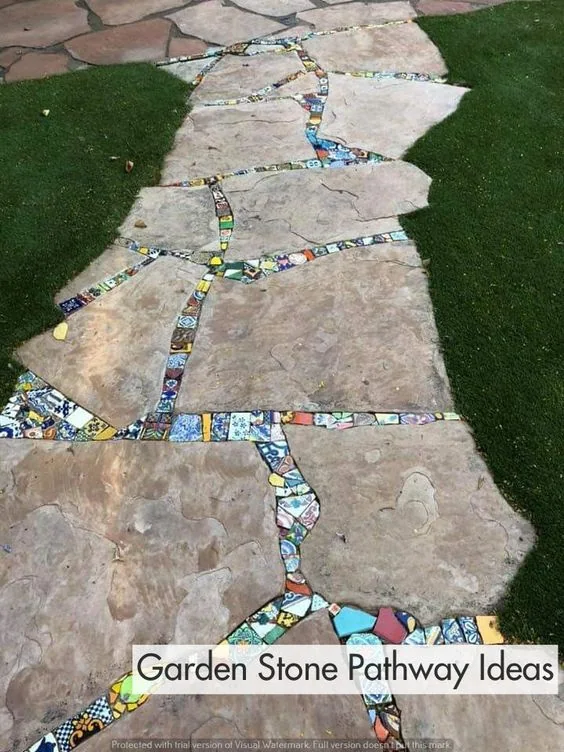
A clever halfway point between plain flagstone and full mosaic — this path uses large natural flagstones as the foundation but fills the joints with colourful mosaic tile rather than mortar or ground cover. It’s a great approach if you want the durability and ease of flagstone pavers but crave a bit more personality. You can buy sheets of small tiles or use broken china and ceramics to fill the gaps. The contrast between the natural stone and the bright tile accents gives the whole path a handcrafted, collected-over-time feel.
4. Pebble Flower Garden Panel
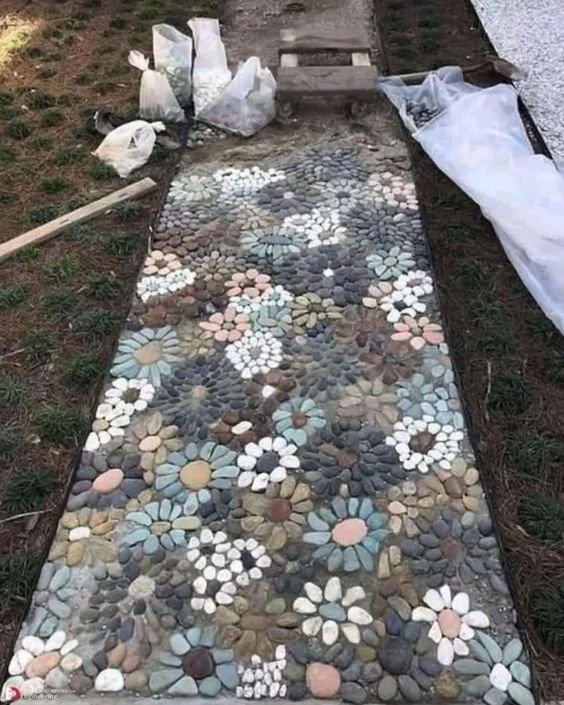
This beautiful pebble arrangement shows what’s possible with nothing more than a bag of mixed river pebbles and some patience. Rather than a traditional path, this is a decorative panel — perfect as a focal point at the end of a garden bed or as a feature set into a larger design. The flowers are formed by arranging oval pebbles in circles and petal shapes, using the natural variation in colour and size to define each bloom. No specialist skills needed — just a trowel, some sand or concrete to set the stones in, and a good few hours on a sunny afternoon.
5. Flagstone and River Rock Cottage Path
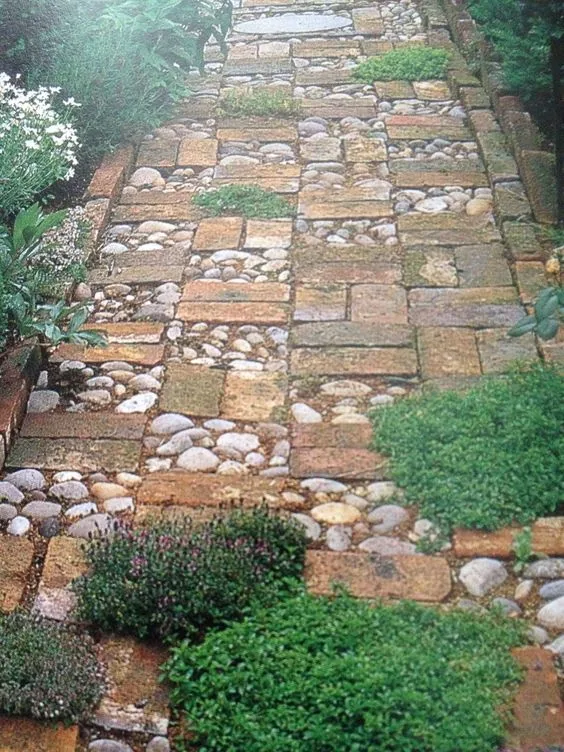
A really satisfying combination — large irregular flagstones laid end to end with river rocks and creeping ground cover filling the gaps between them. What makes it work so well is the contrast between the rough, flat stone and the soft rounded pebbles. To get this look, lay your flagstones first with gaps of about 10–15cm between them, then backfill with a mix of small river rocks. Leave a little soil in spots for low-growing plants like thyme or ajuga to establish — within a season they’ll creep between the stones and soften the whole look beautifully.
6. Pebble Art Flower Feature
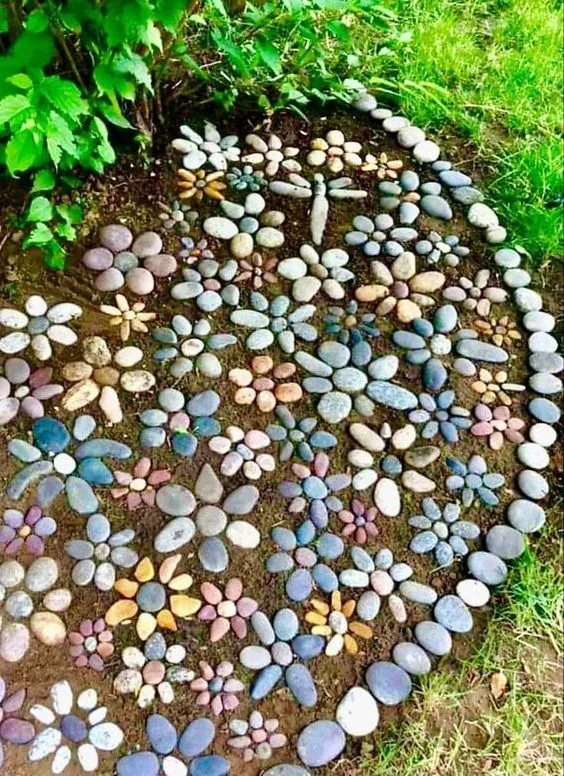
This looks like it cost a fortune but uses nothing but river pebbles pressed into prepared soil. Using pebbles in soft pinks, greys, and blues, someone has created an entire garden of flowers. Each bloom is made by arranging oval stones in a circle with a larger flat stone at the centre. The effect is surprisingly lush when you stand back. It works beautifully as a ground feature under a tree where grass won’t grow, or as a decorative border alongside a simpler path.
7. Bee Mosaic Feature Stepping Stone
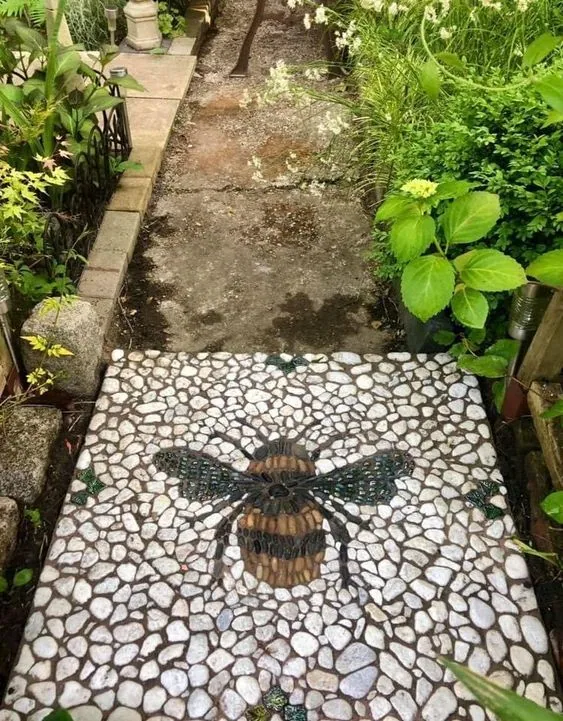
One single stepping stone with a bee mosaic set into a simple garden path — and it changes the whole feel of the space. This is the beauty of mosaic stepping stones: you don’t need to commit to a full mosaic path to get the impact. Make one or two feature stones with a design that means something to you (a bee, a sunflower, your house number) and set them within a more understated path of plain concrete pavers or gravel. The contrast is actually what makes them stand out. A stepping stone mould and basic tile adhesive are all you need to get started.
8. Mandala Mosaic Stepping Stone Path
Individual mosaic stepping stones, each hand-made with a different mandala design, laid in a winding line through a bed of dark polished pebbles. What makes this so appealing is that every stone is a one-off — no two are alike — which gives the path a handcrafted quality that mass-produced materials just can’t replicate. Make each stone using a circular mould filled with concrete, pressing your tile pieces into the surface while it’s still wet. The dark pebble base acts like a frame, letting each individual stone speak for itself.
9. Mosaic Flower Edging Border
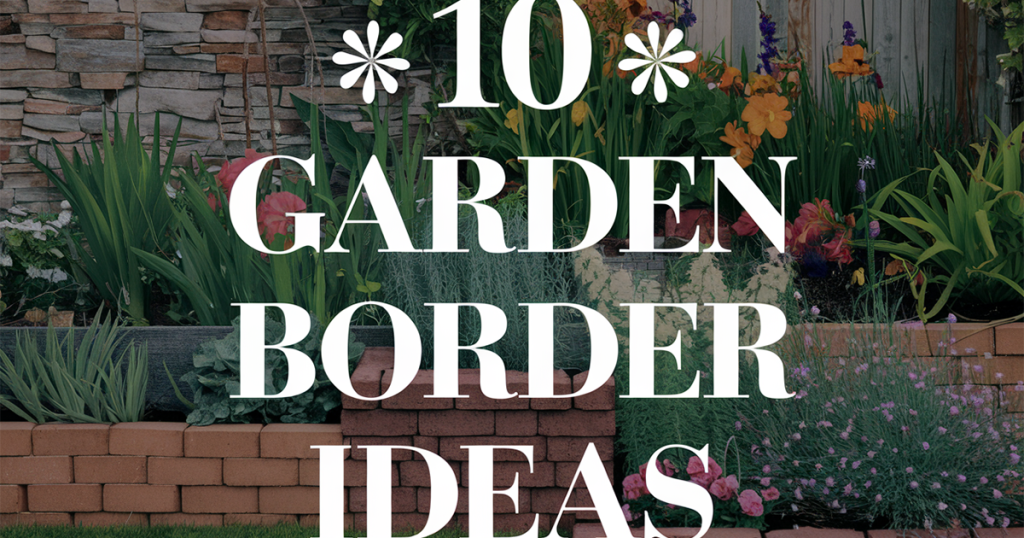
Rather than filling the whole path with mosaic, this design concentrates all the pattern work into a narrow edging strip running alongside a flower bed. The mosaic flowers echo the real ones growing next to them, which makes the whole border feel wonderfully cohesive. It’s a much more approachable project than a full mosaic path — the strip is only about 30cm wide — but the impact is huge. If you’re new to mosaic, this kind of linear border is a great place to start because you’re working in short sections and can stop and start easily. If you enjoy this kind of garden craft, you’ll also love these garden border ideas.
10. Painted Hopscotch Stepping Stone Path
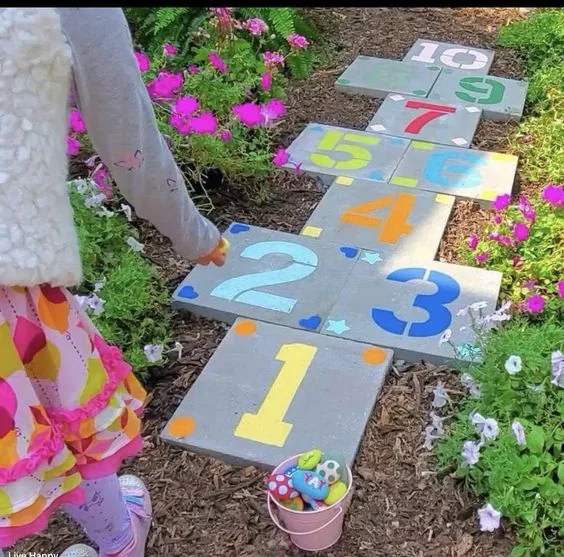
Proof that garden paths don’t have to be serious! These painted concrete stepping stones double as a hopscotch game, making them an instant hit with kids and a talking point for everyone else. The stones themselves are plain concrete pavers painted with outdoor masonry paint — a project you could complete in an afternoon. Set them in a shallow decorative gravel base so they sit flush with the ground, and use bright masonry paint for the numbers. They’ll weather and fade over time, which is actually part of the charm.
11. Sunflower Painted Stepping Stones
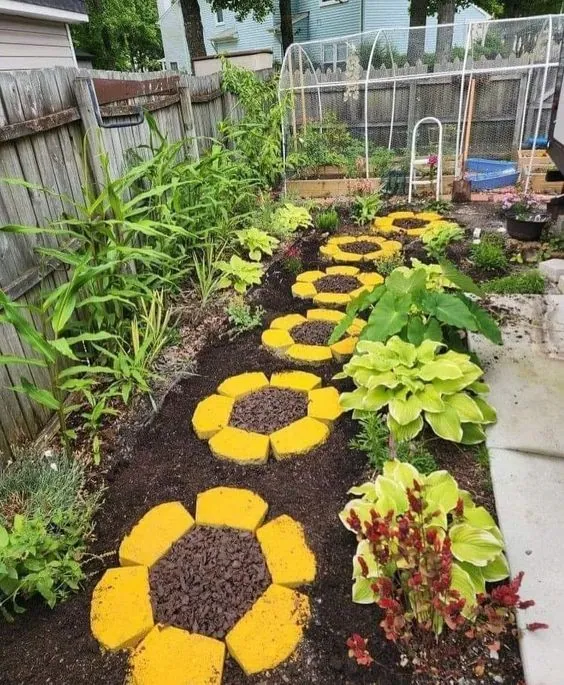
These sunflower stepping stones are made from hexagonal concrete pavers painted yellow with a smaller dark centre paver, set into a garden bed rather than a plain path — which makes them feel more like garden art than functional walkway. The effect is cheerful and completely unique. Recreate this with plain hexagonal pavers and masonry paint, or look for sunflower-shaped stepping stone moulds online. Setting them into dark mulch rather than grass really makes the colours pop.
12. Yellow Brick Road Garden Path
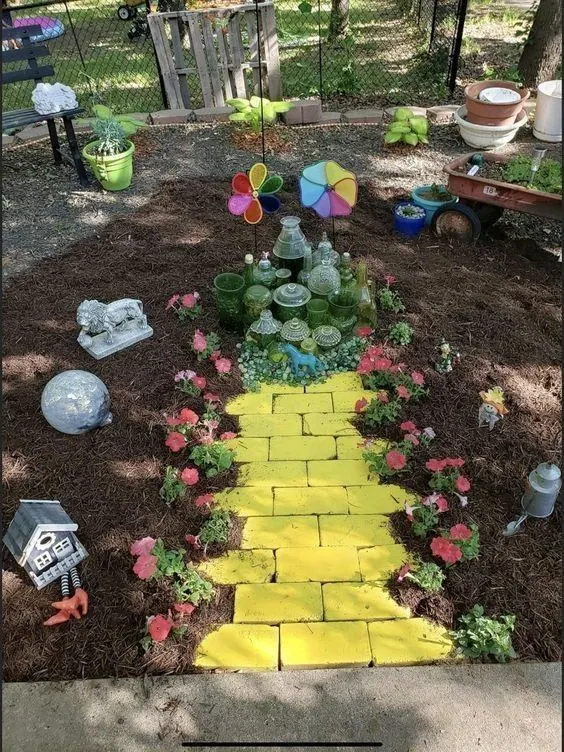
Someone had real fun with this one — a Wizard of Oz yellow brick road running through the garden, complete with garden ornaments and colourful planting. Yellow bricks are surprisingly easy to find at reclamation yards, or you could paint standard terracotta bricks with masonry paint for the same effect. The key to getting the road feel right is the layout: closely jointed, with the edges clearly defined. The whimsical accessories and bold planting do a lot of the storytelling work.
13. Rainbow Painted Rock Path Edging
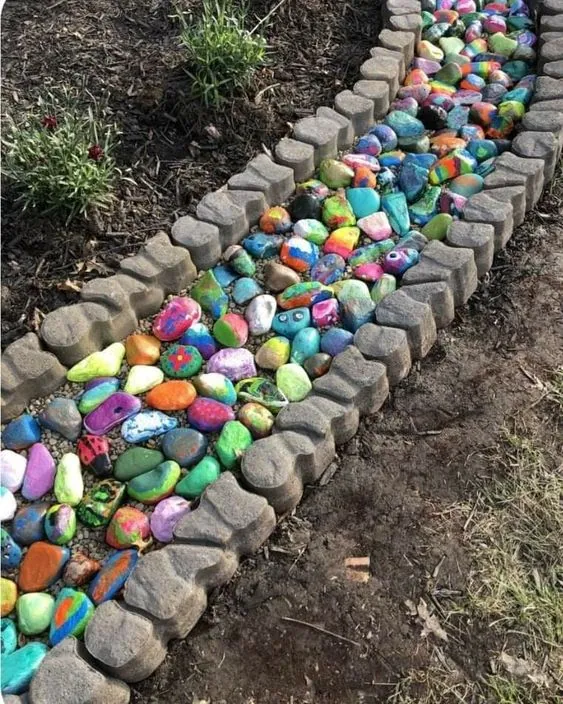
This isn’t strictly a path — it’s a path edging made from painted rocks, and it’s one of the most cheerful ways to define a garden route. Collect smooth, fist-sized rocks (or buy river rocks in bulk), paint them with outdoor acrylic paint in rainbow colours, and seal with exterior varnish. Press them into the soil along either side of your path to hold the edge. It’s a brilliant project to do with kids over a weekend, and the result lasts for years.
14. Leaf-Stamped Concrete Path
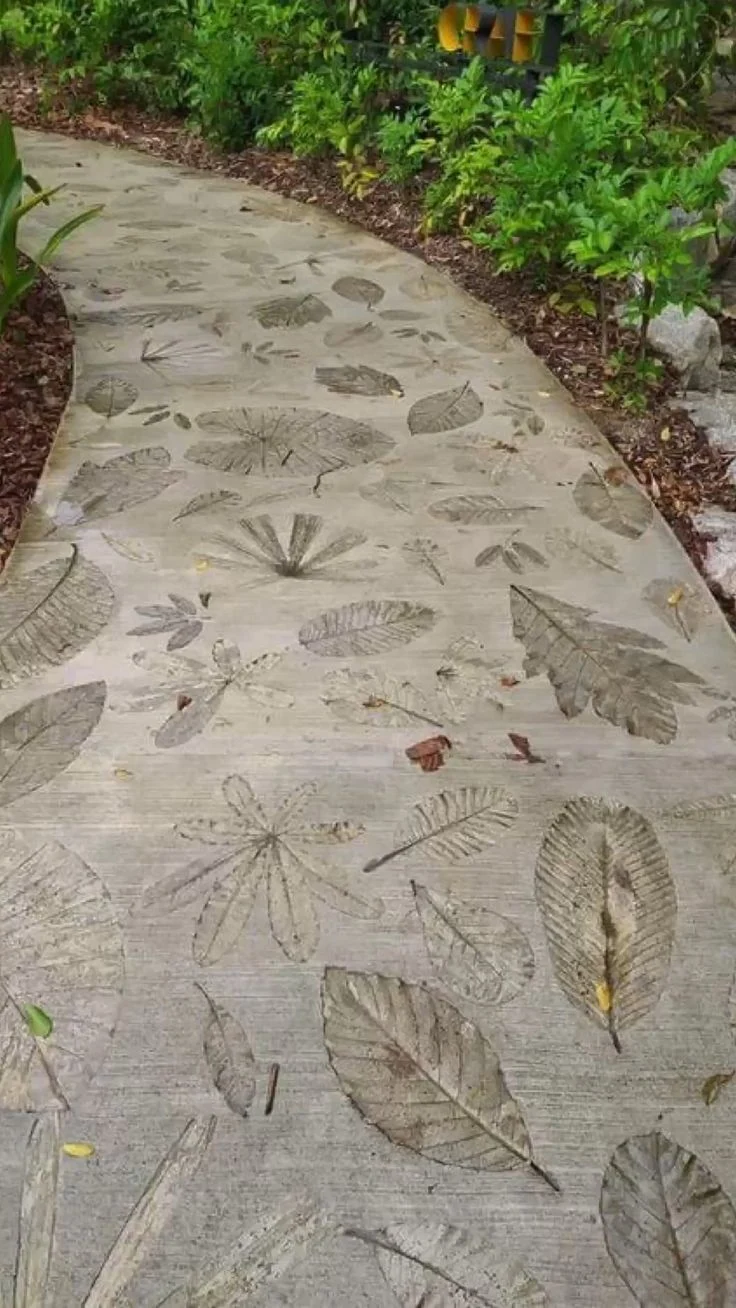
This winding concrete path has been transformed by pressing real leaves into the wet surface before it set — and the results are stunning. Every variety of leaf in the garden has left its imprint, from large tropical-looking specimens to delicate fronds. To do this, pour and level your concrete section, then arrange fresh leaves face-down on the surface and press gently. Leave for an hour until the concrete has firmed up enough to hold the impression, then carefully peel the leaves away. The path gains personality without any special tools — just whatever is growing around you.
15. Timber Board and White Pebble Path
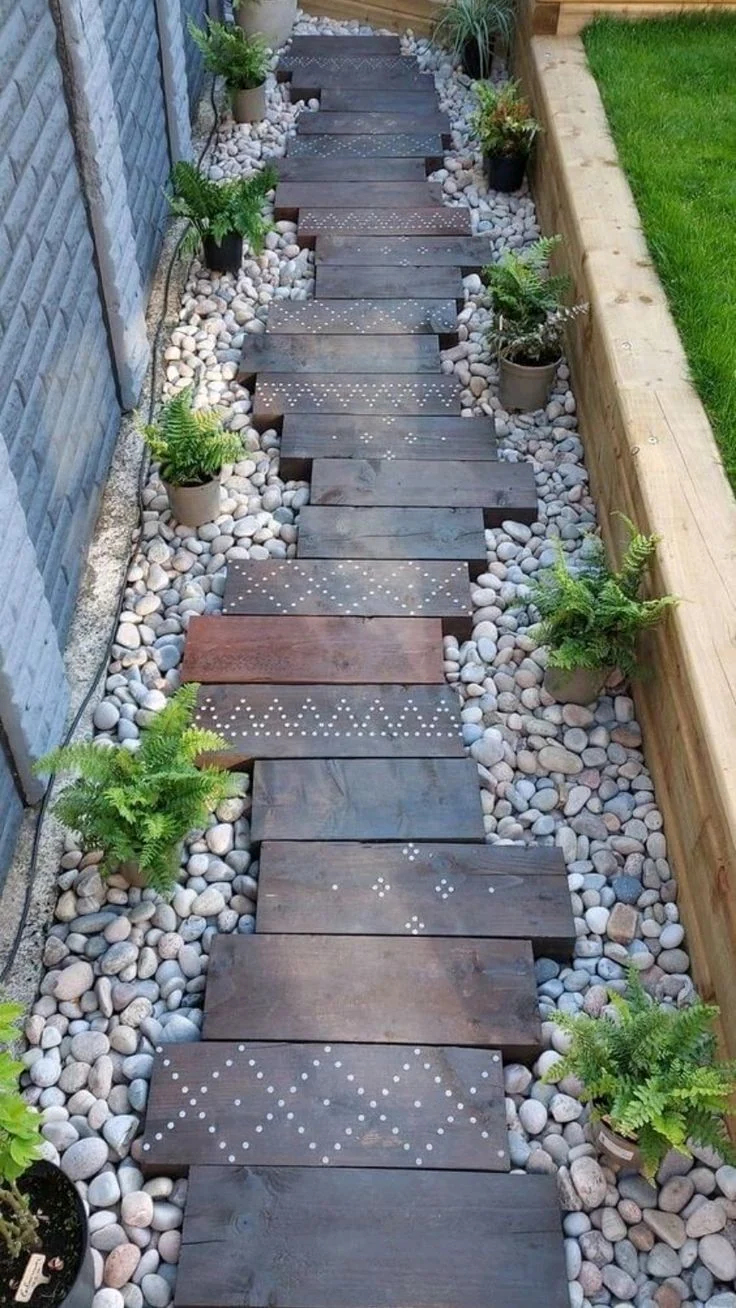
A really contemporary take on a garden path — dark stained timber boards laid horizontally across a narrow side passage, with white river pebbles filling the gaps on either side and ferns planted at intervals. It’s minimal, elegant, and works particularly well in a shaded or enclosed space where you want something that feels considered rather than rustic. Use exterior-grade timber and apply a good deck oil annually to keep it looking sharp. The white pebbles are the secret ingredient here — they reflect light into what could otherwise be a very dark corner. For more ideas on making the most of space like this, see our deck landscaping ideas.
16. Painted Flower Stepping Stone Path
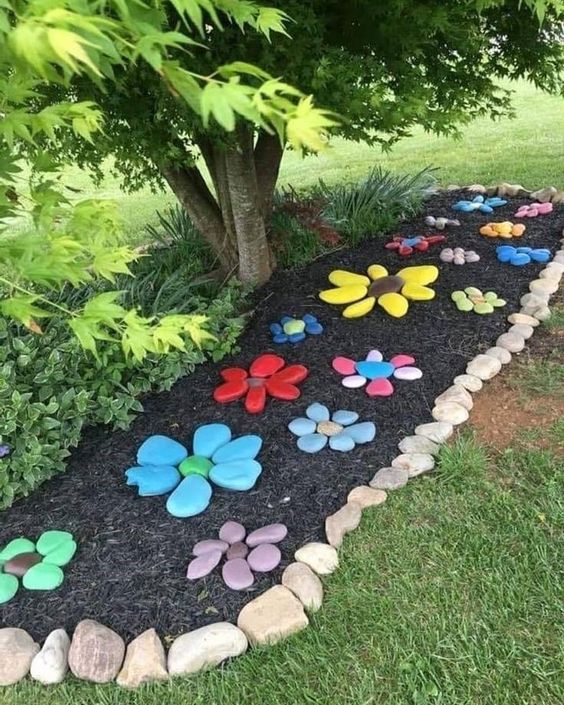
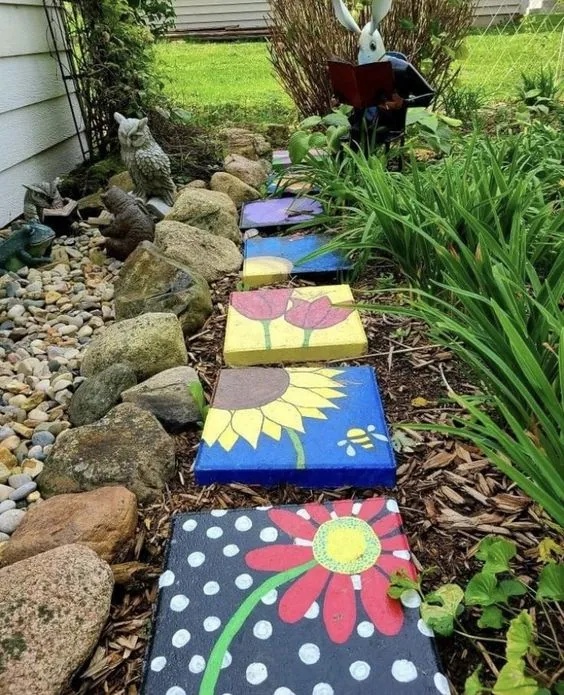
Bold painted stepping stones on a background of black mulch — the contrast is striking and the effect is more contemporary than you might expect from painted concrete. Each stone has a different flower design in bright, saturated colours, making the path feel like a trail of blooms leading through the garden. Paint plain concrete pavers with masonry primer first, then use outdoor acrylic paint for your designs and finish with an exterior varnish. Black bark mulch is the real secret here — it makes the colours absolutely pop.
17. Reclaimed Brick and Cobble Cottage Path
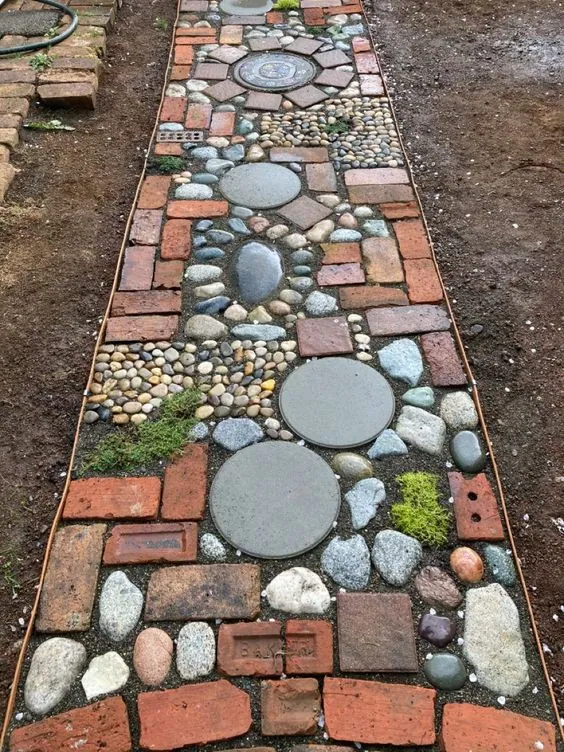
This path has a wonderful slightly-fallen-apart quality that took no effort at all to achieve — it’s the natural result of laying mismatched reclaimed bricks and stones loosely in sand and letting plants fill the gaps. Pick up a mixed batch of old bricks from a reclamation yard (the variation in colour and age adds so much character), lay them on a sand base without mortar, and leave generous gaps. Plants like thyme, mind-your-own-business, and baby tears will self-seed into the cracks within a season and start softening the edges all by themselves.
18. Succulent and Stone Patchwork Path
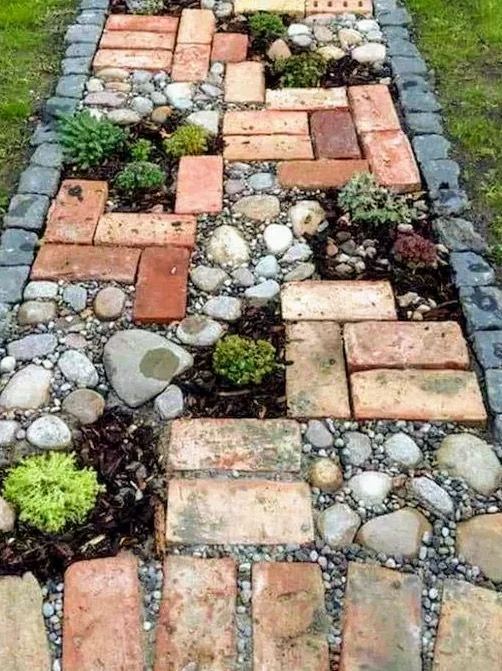
Old bricks and flat stones laid together with succulents and alpine plants growing between them — this path looks like it’s been there for decades even if you laid it last summer. The trick is in the planting: low-growing succulents, sedums, and alpines are drought-tolerant and low-maintenance enough to thrive in the gaps between paving without becoming a tripping hazard. Plant them in the joints when you lay the path rather than waiting for them to self-seed, and water them in for the first season. After that they largely look after themselves.
19. Flowing Pebble River Path with Mosaic Medallions
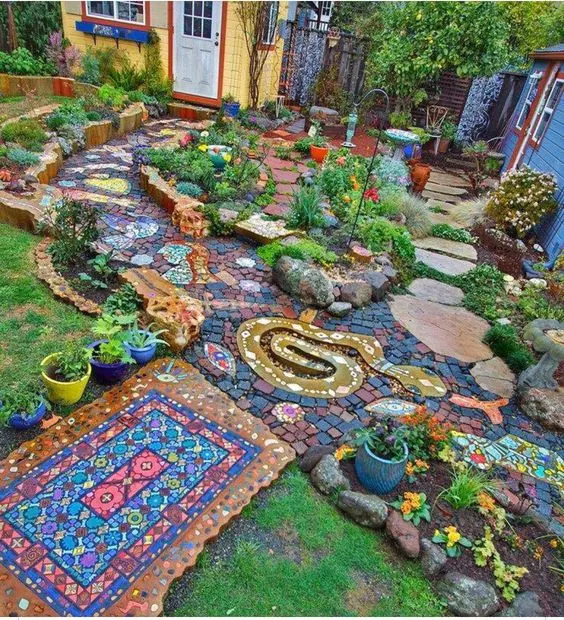
This is a masterclass in pebble artistry — a flowing path made entirely from river pebbles in cream, grey, and brown, with circular flower medallions and butterfly motifs inlaid as focal points along the route. The path actually feels like it’s moving, which comes from laying the background pebbles in flowing curved lines rather than straight rows. To attempt something like this, start with the decorative medallions first and build the background pebbles around them. Work in sections about a metre at a time, pressing the pebbles into a mortar bed before it sets.
20. Bold Sunflower Pebble Mosaic Path
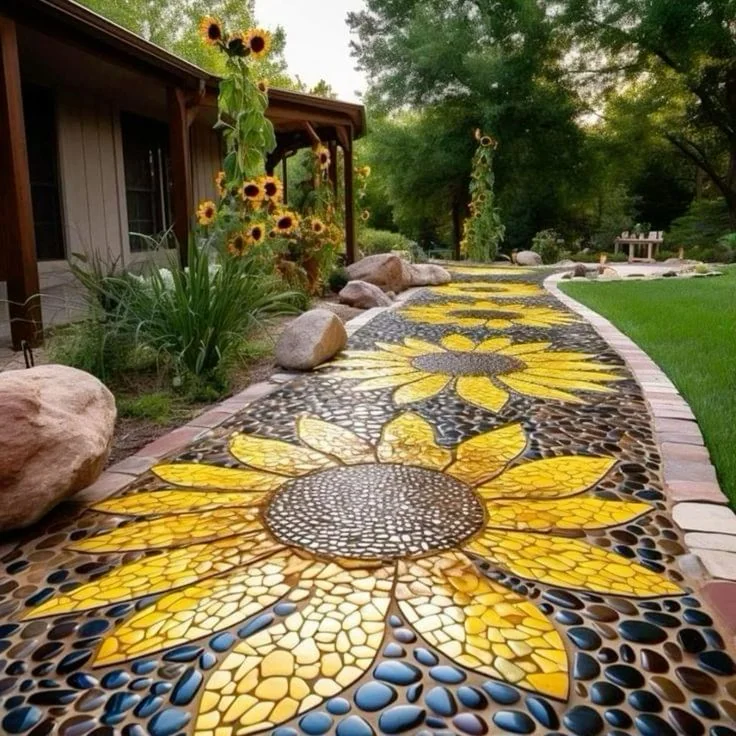
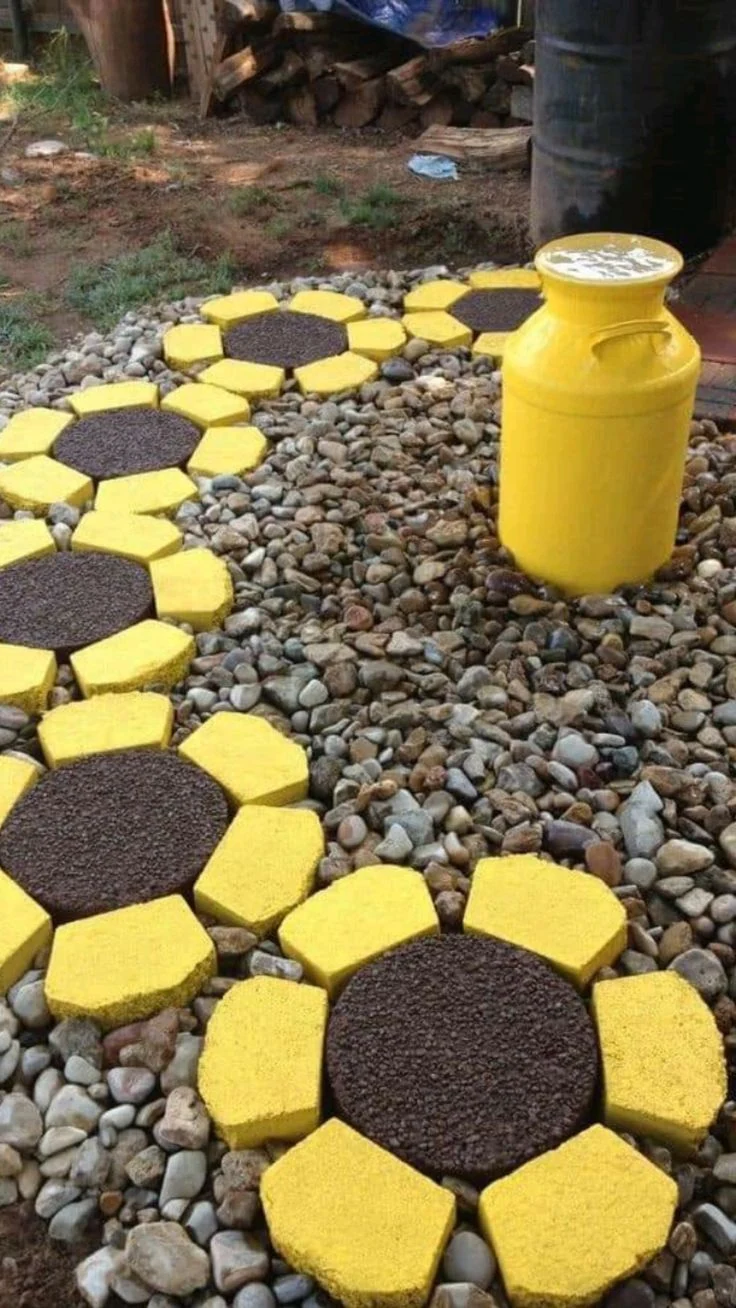
A sweeping sunflower mosaic path made entirely from black and yellow pebbles, leading right up to the front of the house. The scale of the sunflower heads — nearly a metre across — is what makes this so dramatic. But what’s inspiring here is how simple the design actually is: dark background pebbles, yellow petal shapes, and a central dark circle. You could recreate one sunflower as a garden feature or front doorstep medallion in a much more manageable size. Mark out your design with chalk or string lines first, work from the centre outward, and press each pebble into a stiff mortar bed as you go.
How to Make Sea Glass Stepping Stones
How to Make Mosaic Stepping Stones with a Baking Pan
Love the mosaic look but not sure where to start? These videos walk you through making your own mosaic stepping stones at home — no specialist tools needed, just a baking pan, cement, and a little creativity.
How to Create a Pretty Stone Pathway
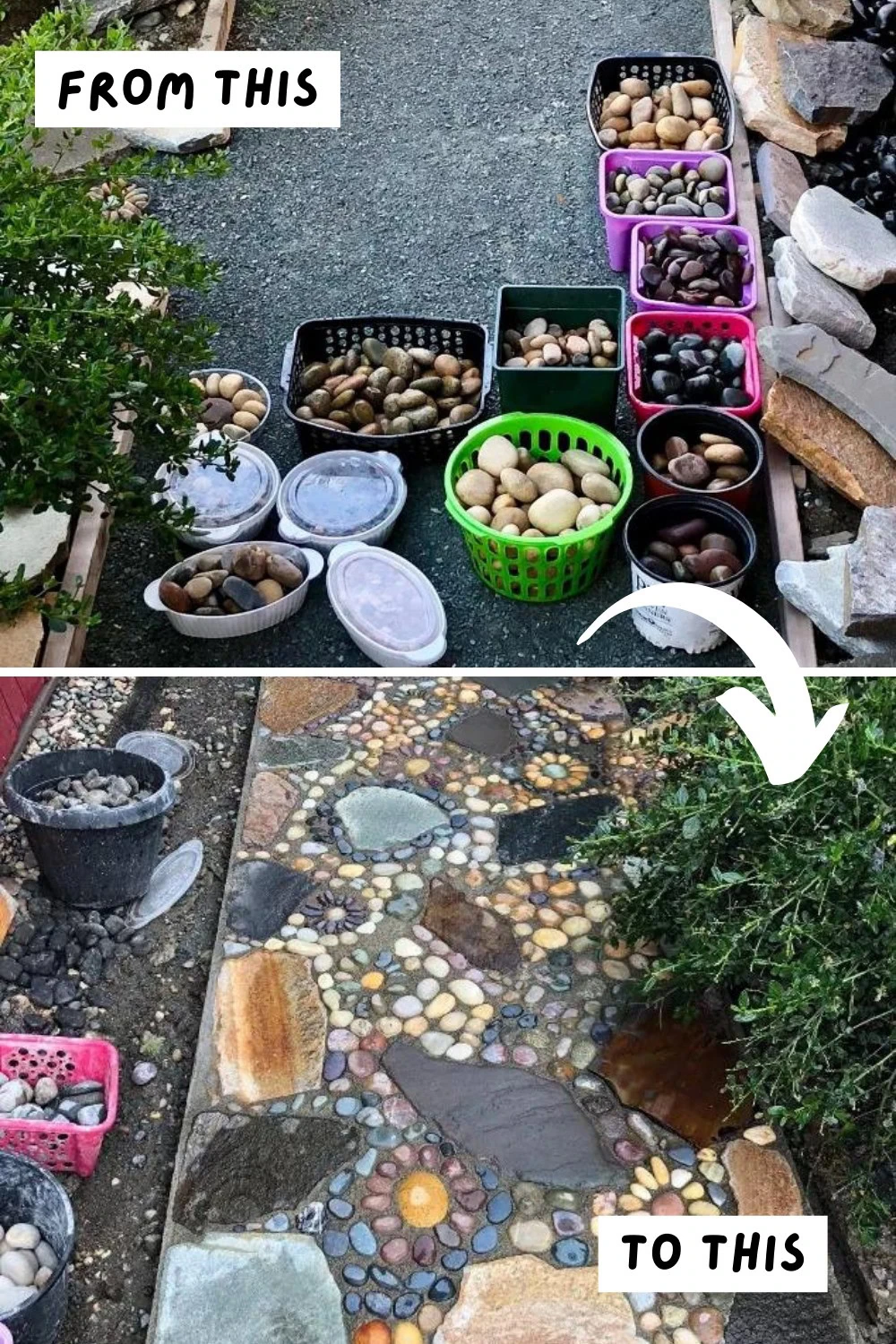
Find out how Kendall took several laundry baskets filled with stones and pebbles and turned her ugly concrete pathway into something beautiful! See the tutorial here
A beautiful path is just the beginning. Once your garden route is in place, you’ll find yourself wanting to fill the space around it with just as much charm. Take a look at these enchanting DIY fairy door ideas to add a touch of magic along your new path, or browse our backyard privacy ideas if you’re creating a more secluded garden space. Whatever material you choose, a well-designed path transforms not just the way you move through your garden — it transforms the way the whole space feels.